Trigger Warning: A typical history of one of the girls referred to the Policy Center includes Complex Trauma. Many of the girls we serve have experienced family dysfunction, domestic violence, physical abuse, and sexual abuse and exploitation. They have endured countless breaches of trust and re-victimization at the hands of system failures in education, criminal justice, child welfare, and the like. Instead of judgment and punishment, what these girls and young women need is to be SEEN. Once they are seen, they can be understood. Once understood, these girls can embark on healing journeys that transform them from surviving to thriving. When I received an invitation to be the guest blogger, I knew instantly that I wanted to highlight stories of resilience, healing, and hope.
Creativity and Healing
Paving the way for the embodiment of the spirit of resilience and creativity, staff at the Policy Center provide transformational opportunities for girls to tap into their creativity. Girls often find their power, their voice, and even newly discovered talent through writing, painting, drawing, performing, and creating that turns pain into triumph.
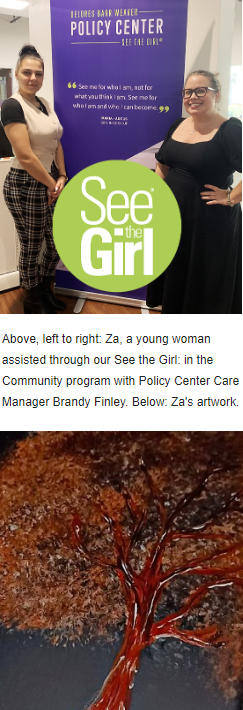
The act of creating something from nothing has a way of empowering and healing—it’s not about perfection, it’s about transformation. We have been both honored and inspired to support girls’ healing through creativity in ways including: assembling portfolios of artwork, taking discarded jewelry and transforming it into beautiful new treasures, and publishing a book of original poetry. Here’s an excerpt from the incredibly talented poet, “Tails.”
“Have you ever heard the saying, it takes a village to raise a child?
Well, I’ve learned that it takes sisterhood to heal a wounded inner child.
To give her the love she never received.
To fill her with unfamiliar truths that fuel her self-esteem.”
Advocacy and Healing
When girls are seen, they can build the courage to engage in self-advocacy, reclaiming their voices to tell their important stories. Articulating their experiences, struggles, hopes and dreams allows girls to control their stories and craft their own narratives. Through advocacy, girls are able to seek the support both they and others with similar lived experiences need. One client who is at the Duval Regional Detention Center has advocated for improved education and opportunities for dual enrollment with FSCJ for college credits. Another has committed to ensuring girls’ current and evolving needs are centered in our work by partnering with staff to update the SAVVY Sister Curriculum. Yet another advocated for medical care for herself and others in the Pre-Trial Detention Center. These bold girls and young women are demonstrating how healing requires a multifaceted approach, with advocacy playing a pivotal role. Every day, I’m inspired by their bravery and resilience.
Connectedness and Healing
Connection to community is a key protective factor in the experience of trauma. Moving out of shame and isolation and into community connectedness requires bravery and inner work. It also requires opportunity and access. Trauma heals when safe, trusted relationships are formed and girls are seen, validated, heard, and respected. After doing the work required to identify those healthy relationships and trusting themselves to do so, girls have gone on to make meaningful connections in the community where they are making a difference. For example, one young woman works as an AmeriCorps volunteer with UF’s GatorCorps. She had an opportunity to help with a cleanup and restoration project at The Nature Coast Biological Station in Cedar Key. Another young woman was deployed for her first assignment as a Merchant Seaman after completing her certification. Yet another received her CNA certification and is excited to join a community of other healthcare providers. All of these young women have taken risks that have resulted in growing their circles of connectedness, all while giving back to the community.
No healing journey is linear, and each one is deeply personal. Moreover, healing is rarely a solitary endeavor, and the support of caring individuals can be transformative. We at the Policy Center are honored to be part of the lives of girls who give us an opportunity to see them—really see them. And we continue to learn lessons of resilience, hope, and empowerment from them each and every day.
In gratitude to all of the girls and women at the Policy Center,
Stephanie Burke
Vice President, Model Programming and Partnerships
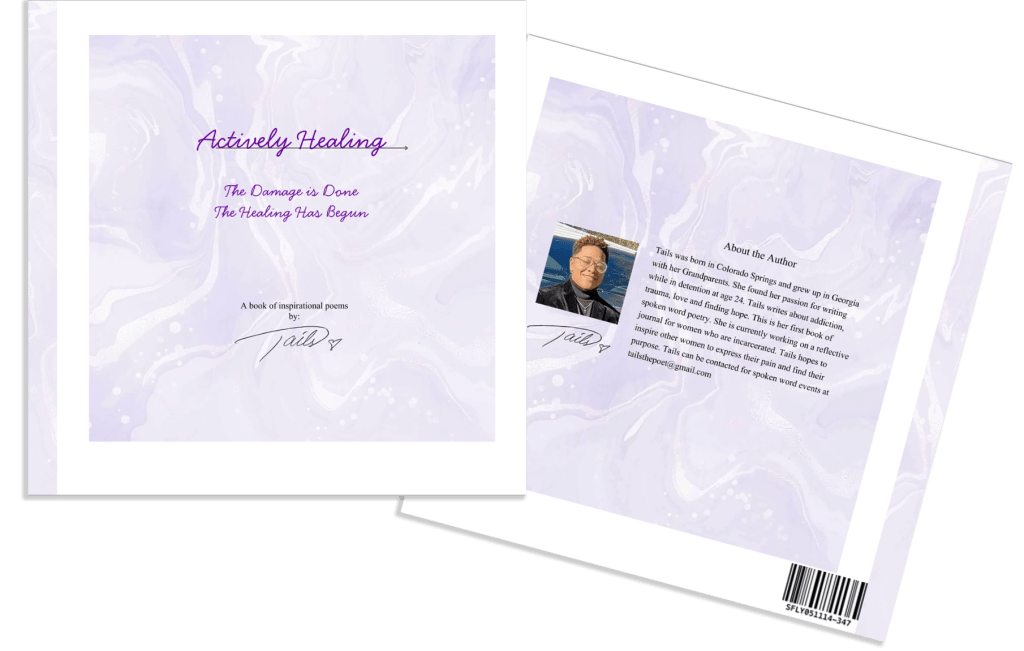
Actively Healing poetry book by “Tails.”
