
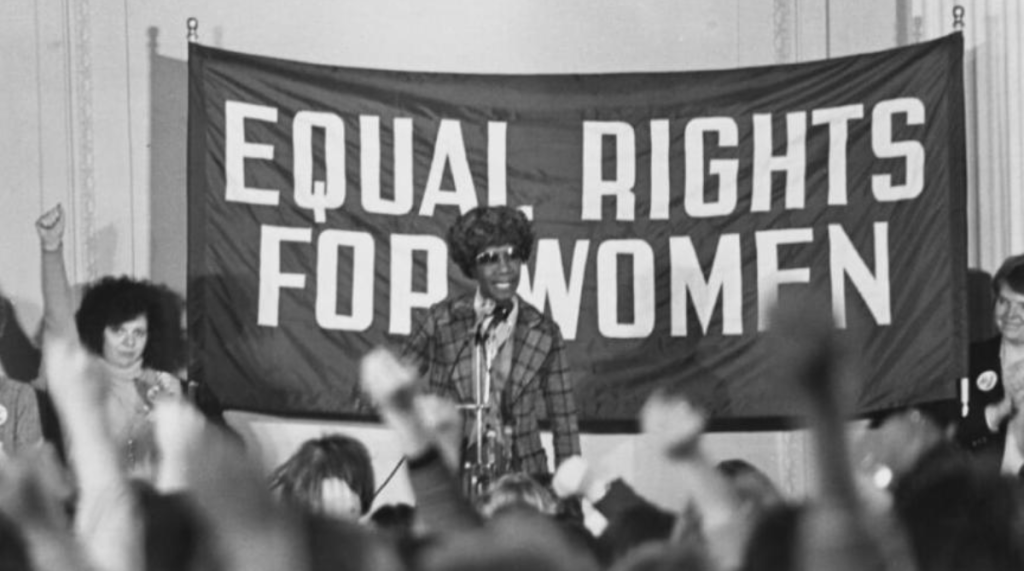
Black History Month is a powerful reminder of the contributions Black Americans have made throughout history. Among these contributions, Black women have played an essential role in leading policy reforms that have shaped our society for the better. Their leadership and influence have impacted not only the lives of Black women but all women. As a woman of color leading the charge in my own sphere, I find it crucial to reflect on and celebrate these pioneers whose shoulders we stand on today.
This month, I am taking an intentional pause to remember the historical trailblazers in policy reform who paved the way for women like me to be in spaces where we can further impact change.
Shirley Chisholm, the first Black woman elected to the U.S. Congress, is a monumental figure in American history. Serving from 1969 to 1983, Chisholm was a fearless advocate for racial and gender equality, education, and social justice. Her groundbreaking presidential run in 1972 set the stage for future generations of women and minorities in politics, including South Asian women.
Fannie Lou Hamer, a civil rights leader and co-founder of the Mississippi Freedom Democratic Party, fought for the right to vote and to ensure that Black voices were heard in the political process. Her courageous stand at the 1964 Democratic National Convention spotlighted the ongoing fight for civil rights, reminding us that our voices are powerful tools for change.
Barbara Jordan, a formidable orator and the first Black woman from the South elected to the U.S. House of Representatives, played a pivotal role in advocating for civil rights and ethical governance. Her work in the Watergate hearings showcased her dedication to justice and integrity, principles that continue to guide my work today.
Contemporary Leaders Making Waves
Stacey Abrams has become a modern icon in policy reform, particularly for her efforts in voting rights and fair elections. Her work in Georgia, through initiatives like Fair Fight Action, has had a profound impact on voter access and engagement, especially among marginalized communities.
Kamala Harris, the first Black-South Asian woman Vice President of the United States, broke barriers by advocating for a range of issues including criminal justice reform, healthcare, and immigration. Her recent role in such a high office is a beacon of hope for many aspiring leaders.
LaTosha Brown, co-founder of the Black Voters Matter Fund, is a passionate advocate for Black communities, focusing on increasing voter registration, participation, and empowerment. Her work underscores the importance of grassroots efforts in shaping policy.
The Delores Barr Weaver Policy Center’s Role
At the Policy Center, our commitment to the well-being of girls and young women, particularly those impacted by the juvenile justice system, continues this legacy of advocacy. Our “See the Girl” initiatives aim to address systemic inequities and promote policies that offer support and services rather than punishment. This approach mirrors the transformative efforts of Black women leaders who have tirelessly fought for justice and reform.
By addressing the unique needs of girls in the justice system, the Policy Center works to create more equitable outcomes, ensuring that every girl is seen, heard, and protected. This mission resonates deeply with me as I continue to strive for justice and equality in my work.
As we celebrate Black History Month, we honor the past and present leaders who have driven policy changes and continue to inspire us. Let’s recognize their invaluable contributions and support organizations like the Delores Barr Weaver Policy Center that carry forward the legacy of these remarkable women. Together, we can continue to advocate for a more just and equitable society.
Sincerely,
Inderjit “Vicky” Basra, DSW
President & CEO
